
From: G Mag <glos.maternity.action@gmail.com>
Subject: Continuity, choice and the restoration of homebirth services
Date: 17 July 2026 at 08:54:38 BST
To: Nicola Moore
Cc: "MOORE, Jo (DSU)", "HOLDAWAY, Matt (GLOUCESTERSHIRE HOSPITALS NHS FOUNDATION TRUST)" >
Dear Nicola,
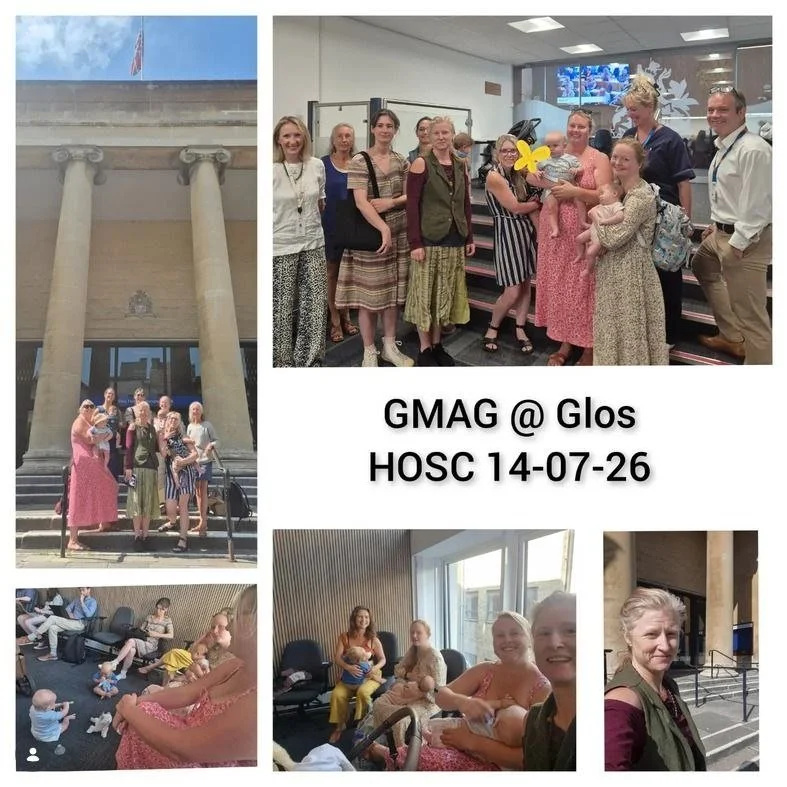
It was good to meet you at HOSC on Tuesday and to hear about your passion for continuity and your hopes for the future of maternity care in Gloucestershire. Thank you for taking the time to come out and speak with us after the meeting.
I particularly appreciated hearing about your recent experience of greater openness and collaboration within the maternity management team. That is genuinely encouraging, and I hope it marks the beginning of meaningful change.
However, women’s choice about place of birth remains restricted in Gloucestershire. This is difficult to reconcile with the NHS Constitution’s commitments to patient choice, involvement in decisions and access to the information and support needed to make those decisions. Decisions about childbirth and the home also engage the right to respect for private and family life under Article 8 of the Human Rights Act.
I recognise that these rights do not create an absolute entitlement to any particular service in every circumstance. However, any restriction must be properly justified, proportionate and based on a genuine consideration of the available alternatives. At present, women appear to be facing a blanket restriction despite reasonable and potentially workable alternatives being available.
As I am sure you are aware, some NHS trusts use independent midwives through contractual or honorary arrangements, while others commission services from organisations such as Zest Midwives. Yet we have still not seen evidence of a transparent options appraisal showing that these possibilities were properly explored, costed and assessed before continuing the suspension.
My understanding is that community midwives’ concerns about attending homebirths arose not because homebirth itself is inherently unsafe, but because of wider organisational problems: poor leadership, fragmented care, lack of continuity, inadequate access to information before attending women in labour, and insufficient multidisciplinary planning and support.
Those are serious concerns, but they are service-design and leadership problems. Removing women’s choices to redesign the service, does not automatically resolve their underlying causes.
Planned homebirth remains a safe and appropriate option for most women, and it should remain available as a genuine choice. I would welcome a clear plan that protects women’s lawful choices from being removed because of service-design and leadership failures.
Gloucestershire has midwives with the skills and experience to provide this care when they are given the autonomy, continuity and support they need. It is the current system that is failing both women and midwives—not homebirth itself.
National maternity policy continues to emphasise personalised care, informed decision-making and meaningful choice of birth setting.
There also appears to be a troubling inconsistency in the way choice is supported. At a previous HOSC meeting, a Trust representative stated that when a woman requests a caesarean birth, her choice must be supported. I agree.
Women request caesarean birth for many valid reasons, and NICE guidance is clear that, following informed discussion, their choice should be supported.
However, the same respect for informed choice does not appear to be extended to women choosing homebirth. Instead of investing in reasonable measures to support that choice safely, the service has remained suspended.
It may be argued that money which could have been used to commission temporary independent homebirth provision would be better spent strengthening maternity services as a whole.
Yet the Health Needs Assessment appears to show a substantial increase in expenditure on obstetric and caesarean care (some £5 Million in recent years) despite a falling birth rate.
This raises an important question: why is additional expenditure accepted when it supports increasingly medicalised birth, while comparatively modest expenditure to preserve homebirth choice is treated as unavailable or unjustifiable?
I welcomed hearing about your commitment to continuity, but at present this remains a verbal commitment rather than an operational plan.
The proposal currently being advanced does not appear to include a clear, funded model of continuity. Instead, it risks removing what little continuity still remains in Stroud by restricting the role of community midwives and excluding intrapartum care from their responsibilities.
Women, midwives and GMAG are calling on Gloucestershire NHS to pause the current service redesign and first reinstate the homebirth service with a robust, accountable leadership model. Where there are temporary gaps in skill or capacity, an interim arrangement using independent midwives should be put in place.
Women should not be made to bear the consequences of organisational and leadership failures. These are problems for the Trust to solve, not excuses for removing women’s choices.
I hope your experience and commitment to continuity will help move this work forward in a constructive and practical way.
In particular, we would welcome:
• a pause to the current service redesign while these concerns are properly considered
• the restoration of homebirth support through a robust and accountable leadership model
• interim use of independent midwives where there are gaps in skill or capacity
• sight of the Trust’s 2016 continuity plans, including any subsequent reviews, learning, and the reasons the continuity arrangements were disbanded last year
• meaningful multidisciplinary planning for women choosing birth outside current recommendations
• greater transparency around the evidence, risk assessments and reasoning behind the continued restrictions
I would also welcome the opportunity to meet with you at the hospital to discuss these issues in more depth. Rather than a general listening event, it would be helpful to arrange a focused meeting where we can examine some of these specific points, review the available evidence and plans, and agree clear next steps.
I appreciate your willingness to engage and hope this can mark the beginning of a more open and collaborative approach.
Warm wishes,
Emma Gleave
Gloucestershire Maternity Action Group
07922505272
From: G Mag <glos.maternity.action@gmail.com>
Subject: Request for a formal meeting on the community maternity redesign
Date: 17 July 2026 at 15:04:27 BST
To: "HOLDAWAY, Matt (GLOUCESTERSHIRE HOSPITALS NHS FOUNDATION TRUST)"
Cc: "MOORE, Jo (DSU)" Nicola Moore
Dear Matt,
Thank you for taking the time to speak with us after the HOSC meeting on Tuesday. It was encouraging to hear about the recent improvements in openness and collaboration within the maternity leadership team.
However, significant concerns remain about the proposed redesign of community maternity services and the continued suspension of homebirth support.
Women, midwives and GMAG are asking the Trust to pause the current redesign and properly consider whether the existing community model can instead be strengthened through robust leadership, restored continuity and appropriate interim support from independent midwives where there are gaps in capacity, skill or experience.
The proposal currently being advanced does not appear to include a clear, funded continuity model. Instead, it risks removing what little continuity remains in Stroud by restricting the role of community midwives and excluding intrapartum care from their responsibilities.
The Trust has stated on a number of occasions that elements of this model have been drawn from arrangements used by other NHS trusts. We would therefore welcome sight of the appraisal undertaken before selecting this approach, including the measurable outcomes, evaluations and case studies from trusts where comparable models have already been implemented.
It would be particularly helpful to understand what evidence demonstrates that these models have improved continuity, safety, staff experience, access to place-of-birth choice and outcomes for women and babies, as well as any problems or unintended consequences that have been identified.
We would also welcome sight of the Trust’s earlier continuity plans, including the arrangements developed from 2016 onwards, any evaluations or learning arising from them, and the reasons the continuity arrangements were disbanded last year.
At present, women in Gloucestershire remain unable to access homebirth support, despite experienced midwives being available locally and reasonable alternatives to a blanket suspension having been identified.
Planned homebirth remains a safe and appropriate option for most women, and it should remain available as a genuine choice. Gloucestershire has midwives with the skills and experience to provide this care when they are given the autonomy, continuity and support they need.
It is the current system that is failing both women and midwives—not homebirth itself.
Women should not continue to bear the consequences of organisational and leadership problems that are within the Trust’s power to address.
HOSC has asked the Trust to respond to the scrutiny questions raised, and we look forward to receiving those answers at the end of July. Alongside that process, I would like to request a formal meeting with you and the relevant maternity leaders at the hospital.
This would need to be more than a general listening event. We are asking for a serious, properly agendaed meeting where the evidence, previous continuity plans, options for restoring homebirth, the role of independent midwives and the proposed community service model can be examined in detail, with clear actions and next steps recorded.
I hope you would be willing to arrange this and work with us to agree an agenda in advance.
Warm wishes,
Emma Gleave
Gloucestershire Maternity Action Group